Services
FIRE ENGINEERING CONSULTANCY
___________________________________
We are Building Fire Safety Engineering Services and Code Consultants and deliver innovative, highly efficient Solutions and support our clients throughout, from the design phase to the construction phase. We provide our fire engineering services for new and existing buildings including Commercial, Residential, Industrial, Healthcare, Educational and Midrise-Highrise buildings. We serve both the Private and Government sectors.
Fire Safety Engineering

Fire safety engineering design to support all your building (Commercial, Residential, Healthcare, Education, Schools, Industrial etc.) design approval with a Performance Solution for non-compliance in accordance with the relevant Building Codes of Australia, Australian & International Standards along with liaising with the Authorities for your project approval.`
Fire & Life Safety Technical Reports
- Performance-Based Building Code Design.
- National Construction Code (NCC) and Building Code of Australia (BCA) compliance.
- Fire Engineering Reports.
- Compliance Certificate.
Advanced Modelling.
- Fire Modelling
- Smoke Modelling
- Evacuation Modelling.
Building Fire Safety Inspections
- Fire Safety Inspections, Audits, and Gap Analysis.
- Feasibility Studies, Investigations, and Reports.
Peer Review
- Independent Peer Review & Certification.
Authority Liaison
- Dedicated to advocating for our client’s interests by effectively liaising and negotiating with the authorities
Fire Safety Study (FSS)
When a proposed development is considered hazardous or possibly hazardous has a fire and explosion risk, a FSS report is tailored to those hazards.
- In accordance with HIPAP and other relevant Guidelines and Standards
Fire Risk Assessment
Combustible Cladding
Fire Risk Assessment
Combustible Cladding
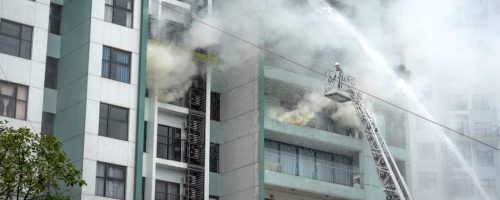
Cladding or cladding system is often used, to enhance the appearance of the building by adding layers of insulation and weather resistance on external walls. E.g. panels, lining, attachments, facade finishes. When it is a combustible cladding system, it can significantly increase the risk to the life safety of occupants and firefighters as well as the risk of structural damage.
We provide Fire Risk Assessment (FRA) for existing buildings with combustible cladding materials such as Aluminium Composite Panels (ACP) and Expanded Polystyrene (EPS) etc.
Fire risk assessments include the following stages:
Client
- Receipt of Building Notices and/or Building Fire Safety Notice by Authority Having Jurisdiction (AHJ)
Quench Fire Engineers
- Conduct site inspection.
- Sample extraction and send for material testing.
- Liaise with stakeholders and AHJ to establish a time frame and deliverables.
- Develop and issue the fire risk assessment report.
- Develop rectification work for partial/full removal of combustible cladding.
Fire Risk Assessment
Dangerous Goods
Dangerous Goods
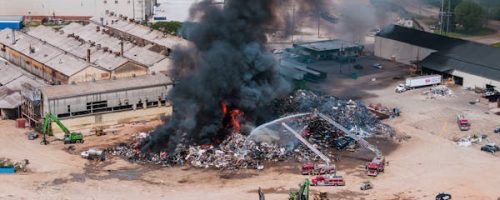
Fire Risk Assessment Dangerous Goods
Dangerous Goods (DG)
- The protection of the Environment is achieved by ensuring the Dangerous Goods sites are in regulatory compliance and the prevention of hazardous incidents. Our comprehensive Fire Risk Assessment (FRA) services are designed for license holders to carry out services safely that we achieve by identifying potential fire hazards, evaluating risks, and implementing effective mitigation strategies.
Battery Energy Storage Systems (BESS)
- For Battery Energy Storage Systems (BESS), it is essential to conduct comprehensive fire risk assessments to ensure safety and compliance with regulatory standards. Understanding the unique risks associated with battery technology can help mitigate potential hazards and protect infrastructure. Prioritizing fire risk management is crucial for the sustainable development of BESS in our quest for cleaner energy alternatives.
Lithium-Ion Batteries
- Understanding the potential hazards associated with lithium-ion batteries is essential for safe usage. These batteries can pose risks such as overheating, catching fire, chemical spill or even exploding if not handled and managed properly.
Electrical Vehicle (EVs)
- Various States and Territories now require, fire risk assessment for EV parking and charging stations. Risk assessment is essential for occupants, firefighters and structural safety, due to the impact of catastrophic EV fires around the world.
Fire Risk Management (Homes VIC)
Fire Risk Management (FRM)
(Homes Victoria)
Housing for occupants with special needs.
Quench Fire Engineer is licensed to conduct Fire Risk Management (FRM) as Fire Safety Engineer in Victoria. This enables us to provide our services for Homes Victoria, with Government, Industry and Social Housing projects for occupants with disabilities.
- Fire Risk Management (FRM).
- Liaise and negotiate with the Authorities.
Fire Protection Services
As fire engineering consultants, we provide our clients with fire services design (except NSW/QLD), also known as fire protection design for existing and new buildings. A required fire system design service safeguards the asset, the life of the firefighter and the occupant when designed in accordance with the Australian Building Code & Standards.
- Fire Sprinklers & Drenchers design.
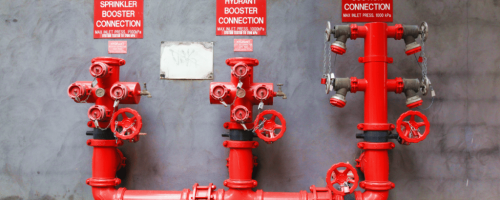
- Fire Hydrant design and Ring Main.
- Fire Hose Reels design.
Expert Witness
Expert Witness
Our team of expert fire consultants is committed to providing comprehensive support in legal proceedings. With a wealth of knowledge and experience, we are equipped to offer expert witness services that ensure clarity and accuracy in your case. Trust us to deliver the reliable insights you need for effective legal advocacy.
- Expert Witness Report
Independent Peer Review
Our initiative focused on enhancing community safety through meticulous evaluations of fire engineering documents. Our team of experts will provide impartial assessments of completed work by other fire engineers, ensuring that our findings adhere to the highest standards of excellence. Together, we can foster a culture of collaboration and innovation in fire engineering design to better protect our communities.
- Independent Peer Review
Compliance Certificate

- Certificate of Compliance – Fire Safety VIC
- Building Certifier – Fire Safety – NSW
Tactical Fire Plans
Tactical Fire Plans
Tactical Fire Plans (TFP)
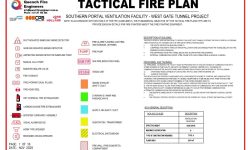
Quench Fire Engineers provides Tactical Fire Plans (TFPs), which are mandated in Victoria and New South Wales through a combination of the National Construction Code (NCC), state-specific building regulations, and detailed operational guidelines issued by Fire Rescue Victoria (FRV) and Fire and Rescue NSW (FRNSW)
Fire Rescue Victoria (FRV)
- FRV Guideline GL-06 – Tactical Fire Plans and ‘As Installed’ Drawings: This is the key operational guideline detailing the format, content, scale, and location requirements for TFPs and ‘as-installed’ drawings within the FRV fire district. The requirements are primarily driven by Building Regulations 2018 (Vic), Dangerous Goods (Storage and Handling) Regulations 2012, Premises storing manifest quantities of dangerous goods must provide site plans (which function as TFPs) as part of their emergency plan for review and approval by FRV.
- National Construction Code (NCC) Clause E1.8: The NCC stipulates that buildings exceeding 50m effective height or those with large floor areas (e.g., Class 6, 7, 8, or 9 buildings with a total floor area >18,000m²) must have a fire control room (FCR) or Fire Control Centre (FCC), which in turn requires durable, colour-coded tactical fire plans.
Fire and Rescue NSW (FRNSW)
- FRNSW requirements are similar, Environmental Planning and Assessment Act 1979 (NSW) & associated Regulations: These provide the legislative framework for building certification and fire safety measures, which reference the NCC and Australian Standards, thereby enforcing TFP requirements.
- Work Health and Safety (WHS) Regulation 2025 (NSW): The WHS Regulation mandates emergency plans for all workplaces and specifically requires a copy to be lodged with FRNSW for workplaces with manifest quantities of hazardous chemicals or major hazard facilities (MHFs). These emergency plans must incorporate TFPs.
- FRNSW Guidelines for Tactical Fire Plans (Policy No. 6) and ESIP Guideline: These detailed guidelines outline the specific requirements for the content, colour-coding, scale (e.g., A3 size, 1:200 scale), and durability of TFPs, which form a critical component of the Emergency Services Information Package (ESIP).
- National Construction Code (NCC) Clause E1.8: The NCC stipulates that buildings exceeding 50m effective height or those with large floor areas (e.g., Class 6, 7, 8, or 9 buildings with a total floor area >18,000m²) must have a fire control room (FCR) or Fire Control Centre (FCC), which in turn requires durable, colour-coded tactical fire plans.